


Long-distance running places repeated demands on the entire body. Muscles become tired, energy stores fall and small equipment problems become more noticeable. Skin friction is another issue that may seem minor at the beginning but become painful after thousands of strides. Applying an anti chafing cream for runners before a long session can help protect vulnerable areas before rubbing becomes soreness.
Distance running does not create chafing through one dramatic movement. The irritation develops gradually. A waistband moves slightly, a wet shirt brushes the chest or the thighs repeatedly touch. Over time, those small contacts can damage the skin.
Why Distance Increases Chafing Risk
The longer you run, the more times your body repeats the same movement. A runner completing a marathon takes many thousands of steps, and clothing can shift during each one.
Several factors become more important as distance increases:
-
Sweat accumulates.
-
Clothing becomes wetter and heavier.
-
Salt can remain on the skin.
-
Body position may change with fatigue.
-
Equipment can begin bouncing or shifting.
-
Weather conditions may change.
-
Protective products may gradually wear away.
-
Small hotspots receive continued friction.
A short run may finish before mild rubbing becomes noticeable. During a long run, the skin remains exposed for much longer.
Common Long-Distance Hotspots
Inner Thighs and Groin
The thighs move continuously during running. Sweat, fitted clothing and long exposure can increase discomfort in these sensitive areas.
Nipples and Chest
Repeated fabric movement can irritate the chest, particularly when shirts become wet. Distance runners should check for rough logos, seams and materials.
Underarms
Arm movement can create friction against the side of the body or the edges of a running vest.
Bra Band and Straps
Sports bras need to provide support, but the band and straps can become friction points during prolonged movement.
Waistband
Shorts, tights, belts and packs meet around the waist. Overlapping items can produce pressure and rubbing.
Feet
Foot swelling, sweat and sock movement can change during a long run. Hotspots may appear even when the shoes felt comfortable at the start.
Neck and Shoulders
Hydration vests and backpacks can move around the neckline and shoulders, especially when bottles become emptier or the load changes.
Prevention Should Begin Before the Run
Waiting for pain to appear is a poor long-distance strategy. Once the skin is irritated, every additional movement can make the area more uncomfortable.
Apply skin protection before putting on fitted running clothing. Use clean, dry skin and cover the complete friction-prone area.
A practical pre-run checklist includes:
-
Apply protection to all known hotspots.
-
Extend coverage slightly beyond each hotspot.
-
Wear clothing tested over a similar distance.
-
Adjust bras, belts and hydration packs.
-
Smooth socks before putting on shoes.
-
Check that pockets do not contain sharp items.
-
Carry a compact anti-chafe product if needed.
-
Pack dry clothing for after the run.
This routine should be practised during training rather than introduced on race day.
Long Runs Require Reliable Application
A useful chafing cream for runners should be easy to apply across several parts of the body. Long-distance runners may need protection around the thighs, chest, underarms, feet and equipment contact points during the same session.
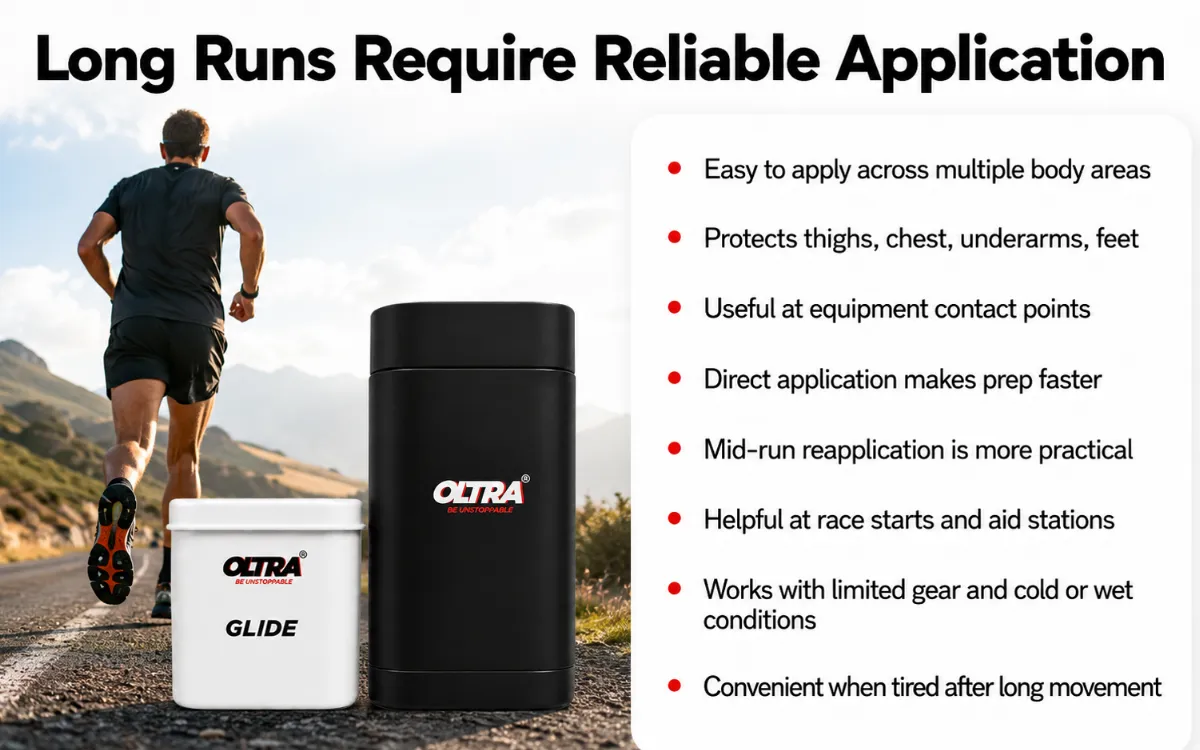
Direct application can make preparation faster and reduce mess. It may also make mid-run reapplication more practical because the runner does not need to spread the formula with their hands.
Consider how the packaging will work when you are:
-
Standing at a race start
-
Using a portable toilet or changing area
-
Reapplying at an aid station
-
Carrying limited equipment
-
Wearing cold or wet-weather clothing
-
Tired after several hours of movement
A product that is convenient at home should also be manageable during the event itself.
Clothing Can Support or Undermine Protection
Skin protection and clothing should work together.
Moisture-managing running fabrics can help reduce the amount of wet material sitting against the skin. Flat seams, suitable sizing and secure waistbands can also reduce movement.
Avoid making last-minute changes before a long event. New shorts may ride up differently, a new sports bra may have an unexpected seam and an unfamiliar hydration vest may move after several miles.
Test the complete outfit during long training sessions, including:
-
Underwear
-
Socks
-
Shoes
-
Shorts or tights
-
Sports bra
-
Running top
-
Belt
-
Hydration vest
-
Jacket
-
Race number attachment
The goal is to reproduce race-day conditions before the race.
Reapplication During Long Events
Some runners complete long events without needing to reapply. Others experience heavy sweating, rain, river crossings or many hours of continuous movement.
Plan reapplication around the expected conditions rather than waiting for soreness. Aid stations, clothing changes and toilet breaks can provide practical opportunities.
Reapply when:
-
The protective layer no longer feels present.
-
Clothing has become soaked.
-
You have changed socks or garments.
-
Rain has continued for a long period.
-
A new hotspot begins to feel warm.
-
Equipment has shifted.
-
The event will continue for several more hours.
A warming or tingling hotspot can be an early warning. Acting early is usually easier than managing raw skin later.
Different Events Create Different Friction
Road Marathons
Road runners often repeat the same movement for several hours. Thighs, nipples, underarms and waistbands are common concerns.
Trail Races
Uneven terrain changes body movement. Hydration vests, poles, elevation changes and wet ground may introduce additional friction.
Ultramarathons
Long duration makes clothing changes and reapplication more important. Runners may also experience changing temperatures and foot swelling.
Obstacle Races
Water, mud and abrasive material can increase rubbing. Clothing should be selected carefully and changed soon after the event.
Stage Races
Skin may not fully recover overnight. Prevention becomes important from the first stage rather than only after irritation appears.
About Oltra
Oltra develops plant-based products intended for active lifestyles and everyday movement. Oltra Glide is the brand’s refillable anti-chafe balm, designed for activities such as running, cycling, walking and gym training.
The starter pack contains a reusable twist-up applicator and one 40g refill. The balm can be applied directly to common friction zones without using the fingers. Oltra describes the product as plant-based certified, vegan, cruelty-free and made without aluminium, parabens or petroleum.
Four unisex scent profiles are available, including the unscented Core option. The formula and packaging are designed to provide a practical addition to a runner’s regular preparation kit.
Why Long-Distance Runners May Prefer a Refillable Balm
Frequent runners can use anti-chafe protection several times each week. A refill system allows the main applicator to be retained instead of replacing the entire package after every unit.
A solid balm format can also be useful in a kit bag because it allows controlled application. Runners can target a narrow waistband area or apply several passes across the thighs.
The most important factor remains consistency. The product should be used before the skin becomes sore.
When Chafing Should Stop Your Run
Mild awareness of a hotspot is a reason to adjust clothing or apply more protection. Sharp pain, broken skin or bleeding should not be ignored.
Continuing to run can deepen irritation and increase recovery time. Stop when necessary, clean the area gently and protect it from further rubbing. Obtain medical advice for severe symptoms, infection signs or irritation that does not improve.
Selecting Long-Distance Protection
The best cream for chafing for distance running should perform as part of a complete strategy. It needs to suit your skin, cover multiple hotspots, travel easily and work with your tested running kit.
Final Thoughts
Long-distance running magnifies small problems. A rough seam, moving strap or unprotected thigh can become increasingly painful over several hours.
Prepare your skin before the run, test your full kit and carry protection when conditions justify it. Preventing friction allows you to direct your attention towards pacing, hydration, scenery and reaching the finish line comfortably.